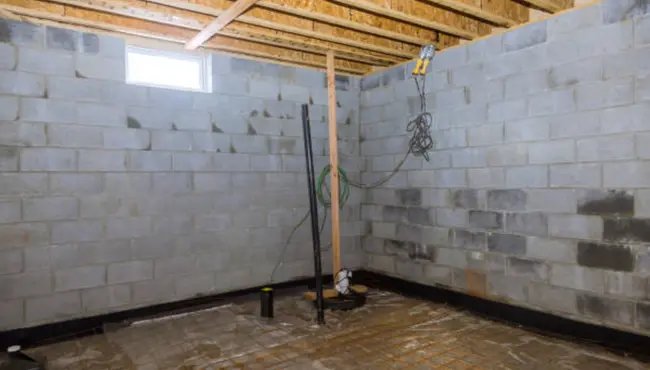
Below-grade walls built with insulated concrete forms must resist both soil-driven moisture and lateral pressure over time. Choosing the right waterproofing system helps protect the wall assembly from early failure, surface damage, or mold infiltration. Properly applied ICF waterproofing ensures long-term performance and meets code requirements in residential and commercial construction.
Why ICF Systems Require Waterproofing Below Grade
Concrete is dense, but still porous. EPS foam slows water uptake, yet allows intrusion through seams and pressure points. Below-grade wall assemblies must use a continuous waterproofing barrier to block hydrostatic pressure and soil-driven moisture migration.
Building codes reinforce this necessity. Section R406 of the 2021 International Residential Code (IRC) mandates waterproofing for foundation walls in areas with high water tables. Section 1805 of the 2021 International Building Code (IBC) establishes similar requirements for below-grade assemblies. These provisions apply to ICF just as they do to conventional concrete, especially when used for basements or retaining walls.
Membrane-Based Approaches to ICF Waterproofing
Several membrane types are used in ICF construction, each offering specific advantages based on wall geometry, substrate conditions, and application method.
Self-Adhered Membranes for EPS Compatibility
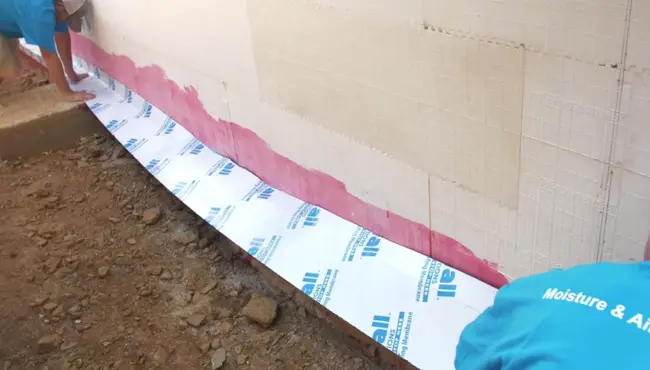
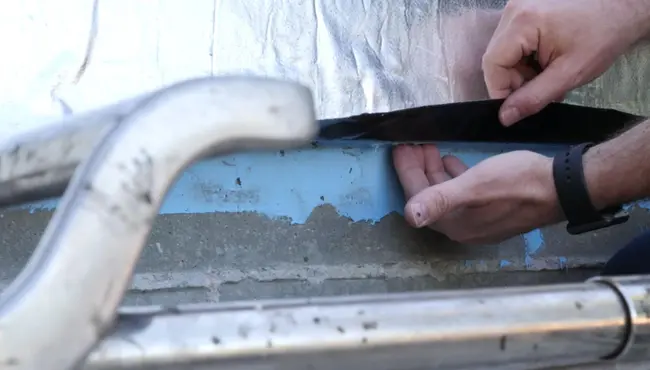
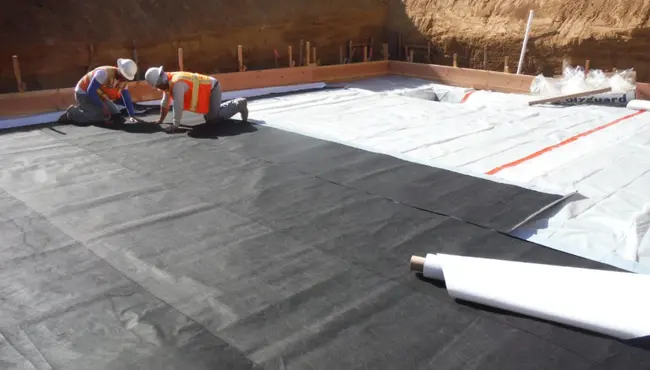
These membranes offer uniform thickness and adhere directly to foam without damaging the EPS substrate. They perform well over flat ICF walls, sealing tightly around surface transitions, penetrations, and seams. Primers are often used to promote adhesion, especially in cold or damp conditions.
Liquid-Applied Membranes for Irregular Conditions
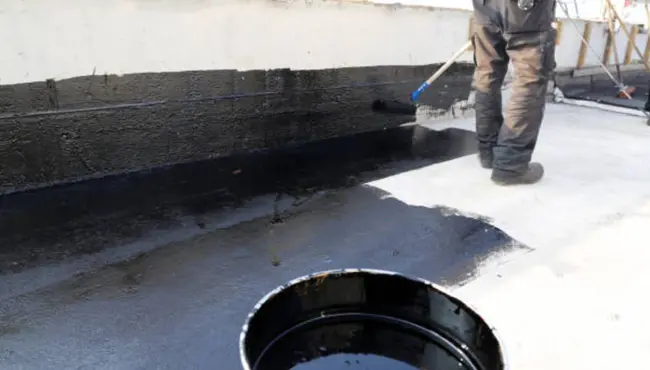
Liquid products are rolled or sprayed onto the ICF surface and cure into a seamless barrier. They are especially useful around curved walls, tie locations, or where service penetrations interrupt the foam plane. Products must be tested for EPS chemical compatibility before selection.
Combining Drainage Mats and Sheet Membranes
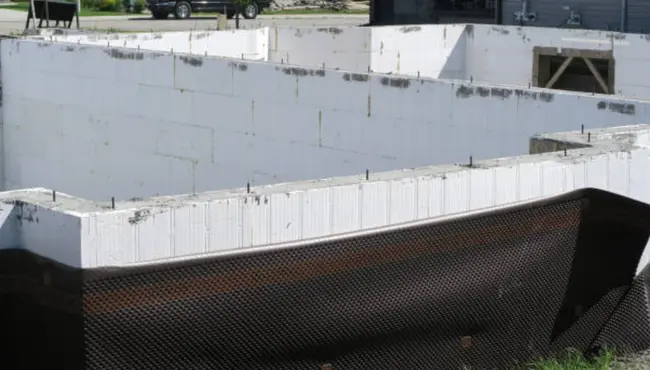
In most cases, a drainage board or dimple sheet is applied over the membrane to protect against puncture and promote water flow downward. These components must not interfere with the waterproofing layer beneath. Filter fabric and drain tile systems often complete the exterior assembly.
Step-by-Step ICF Waterproofing Installation Sequence
ICF waterproofing follows a consistent nine-step sequence that begins with wall prep and ends with backfill compaction.
- Prepare the Wall Surface
Clean the EPS face to remove debris and ensure full adhesion. Surfaces must be dry, firm, and free of release agents or foam dust. - Inspect for Surface Gaps or Protrusions
Fill voids and transitions with compatible foam sealant or parge material. Sand high spots and remove sharp tie ends. - Apply Primer (if required)
Use primer approved for EPS substrates. Allow proper flash time before applying membranes. - Install Base Membrane Course
Start at the footing and apply the first horizontal course of sheet membrane with tight overlap to the footing. Seal transitions. - Continue Vertical Coverage
Lap subsequent membrane courses 3–4 inches. Press firmly for adhesion and seal all seams. - Reinforce Corners and Penetrations
Use compatible corner wraps, pipe boots, or patch membranes at weak points.
Install Drainage Board or Dimple Mat
Place a protection board over the membrane. Fasten per manufacturer guidelines. Ensure it extends to final grade. - Add Filter Fabric and Drain Tile
Place a perforated pipe at the base. Cover with gravel and wrap in filter fabric to promote flow and prevent clogging. - Backfill and Compact in Lifts
Use clean fill. Avoid large rocks or debris. Compact in 12-inch layers to protect membrane integrity.
How Soil Conditions Affect ICF Waterproofing System Design
Moisture movement in soil varies by region and impacts the performance of buried membranes. Clay soils expand and contract with saturation cycles, placing shear stress on membranes. Sandy soils drain quickly but may leave membranes exposed to high flow volume during storms.
Rocky fill increases puncture risk, especially near foundation corners. These factors must be addressed through material selection, edge detailing, and drainage design. Polyguard's 15P drainage board, for example, adds a crush-resistant layer above the membrane to handle rough backfill. Products that tolerate lateral stress and maintain adhesion through freeze-thaw cycles provide the most reliable protection.
Do ICF Foundations Always Require Waterproofing?
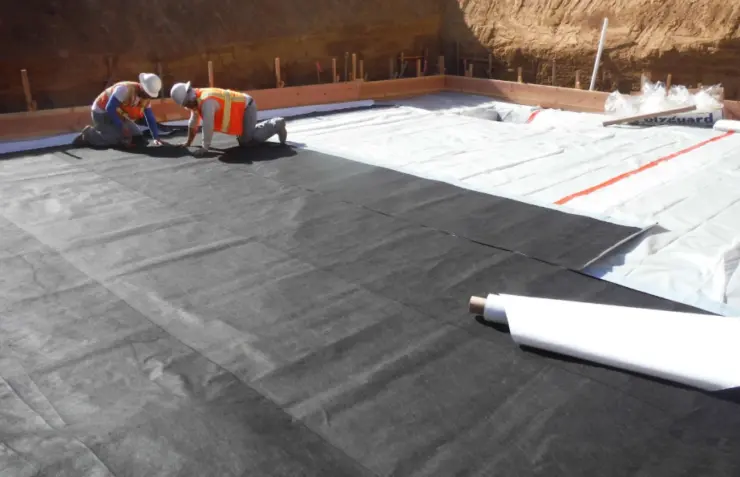
Yes. Below-grade ICF walls must be waterproofed according to modern code. EPS foam is not a standalone barrier, and untreated concrete allows water migration through pores and cracks. As water accumulates outside the foundation, it creates pressure that forces moisture inward.
Unprotected ICF walls risk interior damage, reduced insulation performance, and long-term microbial growth. These failures are difficult to reverse once the wall is backfilled. The best approach is to install a high-performance barrier at the outset.
Key Factors That Influence Long-Term Performance
Long-term durability depends on how well the membrane resists environmental stress and maintains adhesion throughout the wall’s service life.
Membrane Chemistry and Structural Composition
High-quality membranes typically range from 40 to 60 mils in thickness. Thicker membranes provide added puncture resistance during backfill. Most ICF-compatible membranes feature a base layer of rubberized asphalt with a cross-laminated HDPE film for dimensional stability and resistance to soil chemicals.
On-Site Field Testing for Adhesion
Before full application, perform a field adhesion test. Cut a 12”×12” piece of membrane, apply it with primer, and test peel strength after 24 hours. This confirms surface readiness and avoids large-scale adhesion failure later in the process.
Product Overview: Polyguard Membranes for ICF
Polyguard offers several membranes compatible with insulated concrete form walls:
- 650 Membrane: 60-mil peel-and-stick with rubberized asphalt core and HDPE backing.
- WM40: 40-mil version designed for ICF wall adhesion with optional primer.
- UV2‑40: A 40 mil rubberized asphalt sheet membrane with dual‑film reinforcement and aluminum top layer. Offers up to 2 years of UV exposure protection prior to backfill—ideal for delayed installation.
Each system is VOC-compliant and designed to resist water intrusion, lateral pressure, and mechanical stress. All membranes are compatible with Polyguard protection boards and drainage systems.
How to Avoid Common ICF Waterproofing Errors
Failing to clean the surface, skipping primer, or applying membranes over wet EPS can compromise adhesion. Overstretching liquid products or leaving gaps at lap joints often leads to moisture intrusion.
Fast installation improves productivity. However, installers must verify full adhesion and coverage to prevent future failure. Skipping inspection or forgoing a protection course invites damage during backfill and settlement. Systems like Polyguard’s ICF waterproofing membrane are designed to resist punctures and maintain adhesion under jobsite stress.
Protect Your Foundation with Polyguard Barrier Systems
Polyguard manufactures membranes specifically engineered for insulated concrete construction. Our sheet and fluid-applied options provide long-term protection, reliable adhesion, and compatibility with EPS. Contact us today for more information.