Bituminous dampproofing protects foundations from soil moisture. It is specified where structures need resistance to dampness without the demands of full waterproofing. To understand its proper role in construction, it is important to define the material, explain governing specifications, and clarify where dampproofing is appropriate versus where advanced waterproofing is required.
What Is Bituminous Dampproofing?
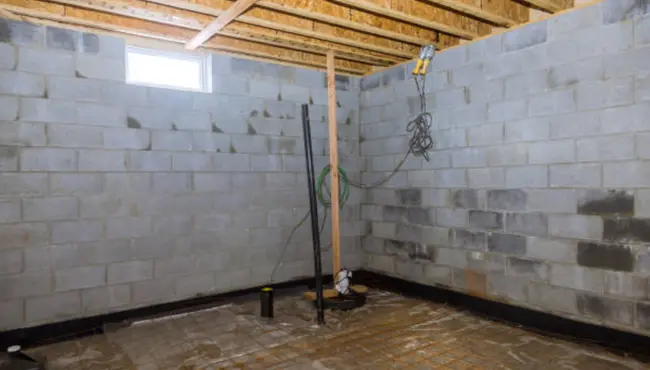
Bituminous dampproofing is an asphalt-based coating, sometimes modified with resins or fibers, applied to below-grade walls and foundations to resist moisture migration. Its role is to stop capillary water movement through porous substrates such as concrete block or cast in place concrete.
Unlike waterproofing membranes designed to withstand sustained water pressure, this treatment is not intended to act as a barrier against groundwater where hydrostatic head pressure is present. That distinction between damp protection and full waterproofing is key for proper specification and long-term performance.
Bituminous Dampproofing Specification
Clear specifications reduce the risk of misapplication by linking product standards to practical jobsite requirements.
Governing Standards
ASTM D1227 outlines requirements for emulsified asphalt used in damp protection and roofing applications, while ASTM D449 covers hot applied asphalt. These standards define viscosity, solids content, and flow resistance at elevated temperatures. Along with ASTM standards, designers often rely on UFGS 07 11 13 Bituminous Dampproofing, which provides editable guide specs to align contractor practice with federal performance requirements.
Project Application Requirements
A typical coating specification identifies whether the product is cold or hot applied, sets coverage rates, and details surface preparation. By fixing these parameters, specifiers ensure that contractors apply materials consistently and in compliance with standards. Specifications also create alignment between design intent, contractor practice, and inspection requirements on site.
Application Methods and Surface Preparation
Application of bituminous coatings depends on both product formulation and site conditions, and each approach has its own requirements.
Cold-Applied Emulsions
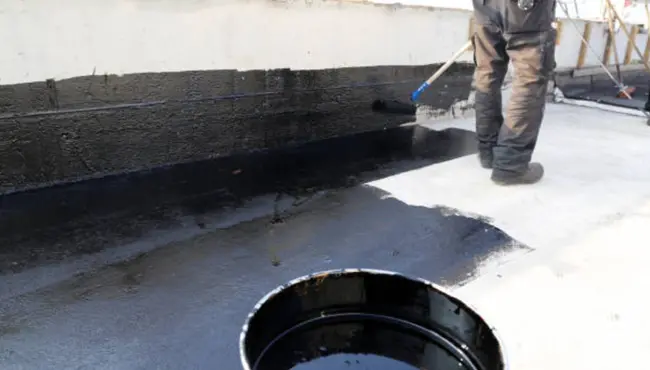
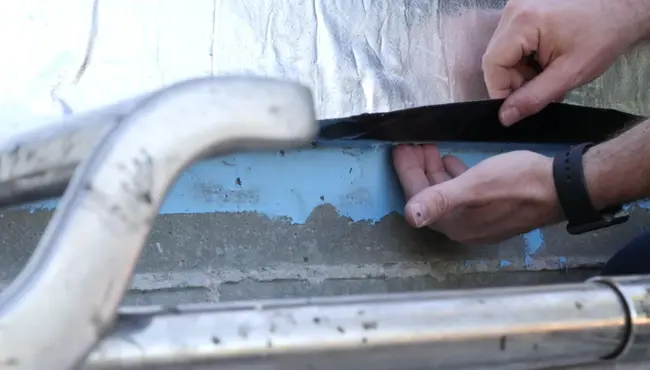
Cold applied emulsions are generally water based and can be applied by brush, roller, trowel, or spray equipment. They are often selected for ease of use, low odor, and compliance with VOC regulations. For irregular geometries and transitions, Polyguard’s Stretch Flex® elastomeric coating is specified within below-grade assemblies to detail penetrations and complex surfaces.
Hot-Applied Asphalt
Hot applied asphalt requires heating to fluid consistency before being mopped or brushed onto the surface. While it bonds strongly, it also carries safety risks and stricter handling requirements.
Surface Preparation
Regardless of the product type, preparation matters. Substrates must be clean, dry, and free of laitance or debris. Masonry joints should be struck flush to prevent channels for moisture movement. On cast in place concrete, release agents and curing compounds must be removed to ensure adhesion. Once applied, coatings should form a uniform, continuous layer free of pinholes.
Field Performance Boundaries
In the field, contractors treat bituminous dampproofing as suitable only where soil moisture is present but groundwater pressure is not. The coating is vapor permeable, allowing water vapor to escape while resisting liquid water intrusion. This makes it suitable for soils with reliable drainage that prevent hydrostatic buildup.
Waterproofing membranes, by contrast, carry elasticity and thickness to resist lateral water pressure. Choosing the wrong system can lead to failure; using this barrier where groundwater pressure exists results in leaks, interior damage, and reduced service life of foundation walls.
Advantages of the System
There are clear advantages to bituminous dampproofing when used in the right conditions.
- Products are widely available, affordable, and straightforward to install.
- Cold applied emulsions can even be used on damp substrates, making them suitable for green concrete when schedules are tight.
These coatings endure in buried environments, resist many soil salts, and extend the service life of foundation walls when paired with drainage. They also meet building code requirements such as the International Residential Code Section R406, which mandates moisture protection for foundation walls retaining earth that enclose habitable or usable spaces below grade.
Limitations of Bituminous Coatings
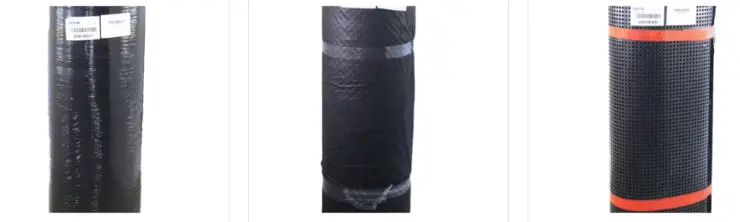
Limitations remain significant since relying on these coatings alone can expose structures to cracking, leakage, and premature failure.
- These coatings fracture when structural movement occurs, unlike elastomeric waterproofing membranes that can stretch and recover.
- They do not self-heal or bridge cracks forming after installation.
- Temperature swings can undermine durability, and UV exposure before backfilling accelerates breakdown.
- Most importantly, they cannot resist hydrostatic water pressure.
- In sites with clay soils, high water tables, or poor drainage, advanced waterproofing membranes provide far more dependable protection.
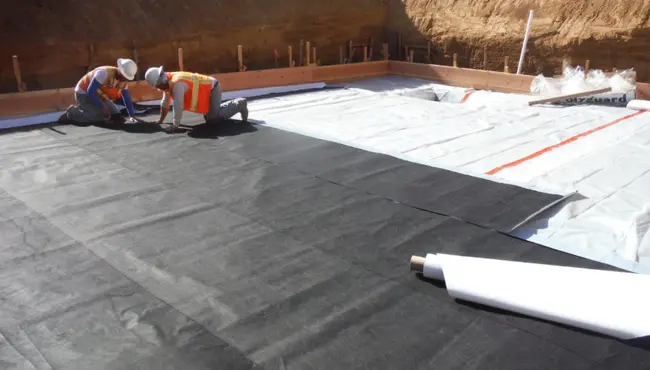
Where hydrostatic pressure or crack-bridging is required, upgrade to a Polyguard waterproofing assembly—650 Membrane or 650 PRM—with LM-95 liquid detailing and a Polyflow® drainage layer.
Best Practices for Design and Installation
Without disciplined installation practices, even compliant coatings can fail under soil and moisture exposure.
Drainage and Moisture Management
This treatment should always be combined with free-draining backfill and foundation drains that lower the water table around the structure.
Material Selection
Where specifications call for this material, cold-applied emulsions often provide the most practical choice due to their workability, low environmental impact, and compatibility with damp substrates.
Protection During Backfill
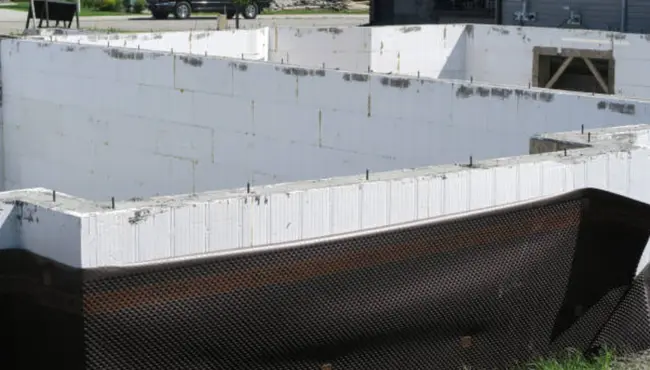
Protective boards or insulation on the exterior face prevent coating damage during backfill operations. By emphasizing drainage and substrate protection, designers avoid relying on the coating alone. Use Polyflow® drainage composites to protect the membrane and convey water to the foundation drain.
Dampproofing vs. Waterproofing: Making the Right Choice
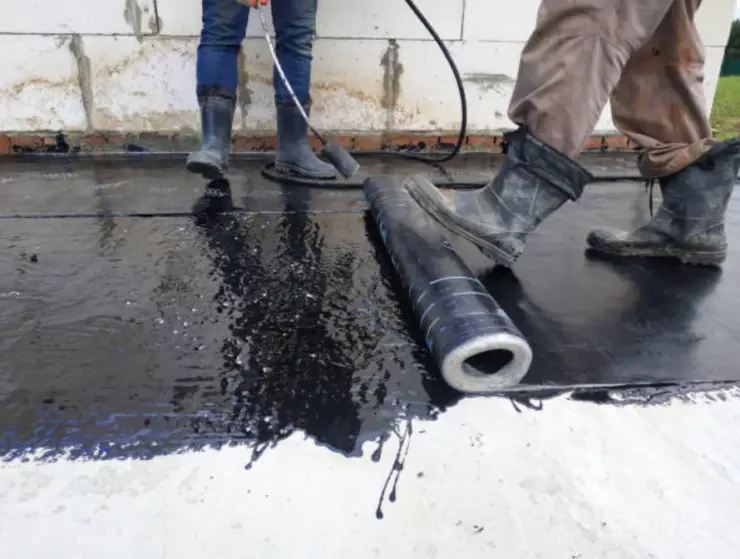
The decision to use damp protection versus waterproofing comes down to site conditions and code obligations.
- Well drained soil with minimal risk of water accumulation supports this material as a cost-effective solution that meets code.
- On the other hand, if soils retain water, if groundwater is present, or if codes specify waterproofing, more advanced systems must be used.
- When waterproofing is required, full membrane systems provide the elasticity and pressure resistance that dampproofing lacks.
This treatment is one option among many — not a universal solution. Responsible specification requires evaluating soil reports, drainage design, and risk factors before committing to a material.
Cost, Compliance, and Long-Term Value
For owners and contractors, the initial savings of damp protection over waterproofing can be appealing, but the long-term tradeoffs must be weighed.
- Repairs to below grade barriers are disruptive and costly.
- Specifying bituminous dampproofing where it is appropriate ensures compliance and performance, but misapplication can erase those savings.
- Adhering to ASTM and UFGS specifications minimizes risk by clarifying acceptable materials and installation methods.
This creates confidence that what is applied in the field matches what the designer intended.
Specify Polyguard Waterproofing Solutions for Lasting Protection
Polyguard provides below-grade waterproofing systems designed to perform where simple coatings cannot. Our membranes, barriers, and protective accessories ensure foundations resist moisture, comply with codes, and deliver long-term reliability. Contact us today for more information.