Waterproof garage systems are necessary to prevent long-term damage from runoff, standing water, and ground vapor. Garages face unique risks due to runoff, foundation exposure, and poor drainage conditions. Garage waterproofing requires knowing where water enters, which materials prevent intrusion, and how to apply them across floors, walls, and joints.
Identify Where Water Gets In and Why It Stays
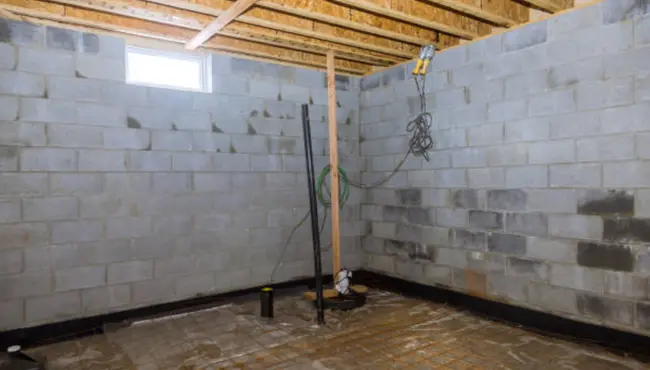
Garage floors, walls, and doorways all act as vulnerable entry points for moisture. Water travels through floor slab cracks, unsealed wall joints, and gaps beneath the garage door. Vapor from the ground or runoff from outside can both cause saturation. If ignored, these small openings lead to larger structural issues like mold, corrosion, and concrete deterioration.
Detailed moisture diagnostics can uncover less visible threats. Use an ASTM plastic-sheet test over the slab for 24 hours and check for condensation. A moisture meter or hygrometer reveals flooring compatibility issues. Thermal imaging may expose hidden water routes in walls. These methods guide targeted repairs and avoid wasted effort on surface-only fixes.
Start With Site Drainage and Perimeter Control
Redirecting surface runoff is one of the most important ways to prevent water from reaching the structure. This includes reshaping soil slopes, extending downspouts, and installing drains around the garage footprint. If rainwater or melting snow collects near the foundation, even durable interior coatings will begin to fail.
- Before applying waterproofing products, property owners must reduce water contact at the exterior.
- Grading, landscaping changes, and water path rerouting all work together to limit saturation.
- Consider installing French drains at the perimeter when groundwater is elevated.
- Proper slope correction and trenching reduce saturation risks and support any effort to waterproof garage foundations from the outside in.
These steps provide the first layer of protection and must be in place before interior measures are applied.
Prepare Concrete and Substrate for Waterproofing
Waterproofing products cannot adhere properly to surfaces that are dirty or compromised. Before any coating or membrane is installed, the garage slab and walls must be cleaned, dried, and stabilized. This may involve power washing, degreasing, and filling any active cracks with polyurethane sealants.
Concrete that has spalled, flaked, or shifted requires additional prep. Minor damage can be repaired, but large voids or heaving indicate structural movement that must be addressed first. All seams, corners, and joints must be smooth and intact so that waterproofing products can bond uniformly. ASTM C836 outlines required substrate preparation steps, including profile and flatness.
How to Select Materials That Truly Waterproof a Garage
Waterproofing is not a one-material solution.
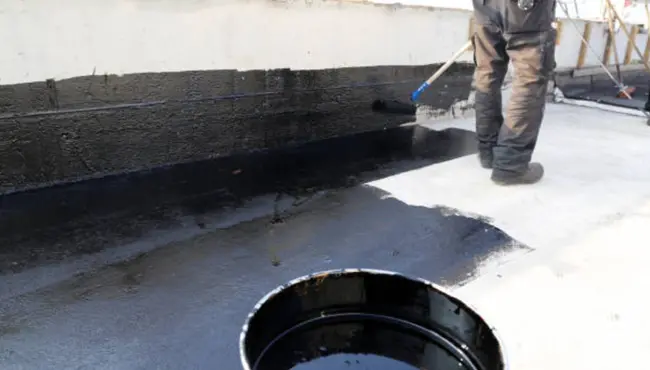
- Floor slabs benefit from liquid membranes or high-adhesion coatings.
- Garage walls often need breathable repellents that stop water without trapping vapor.
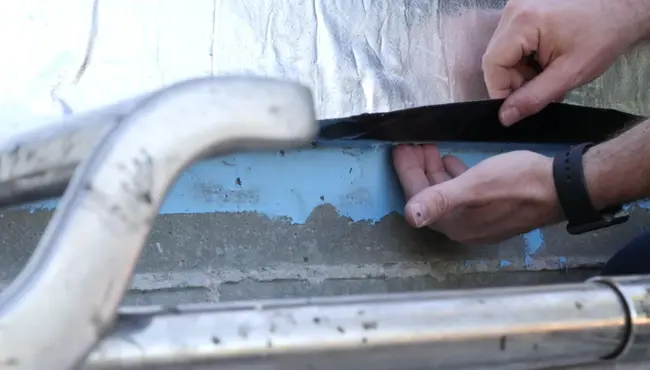
- Some surfaces also require expansion joint tape or sealant where cracks are likely to form again.
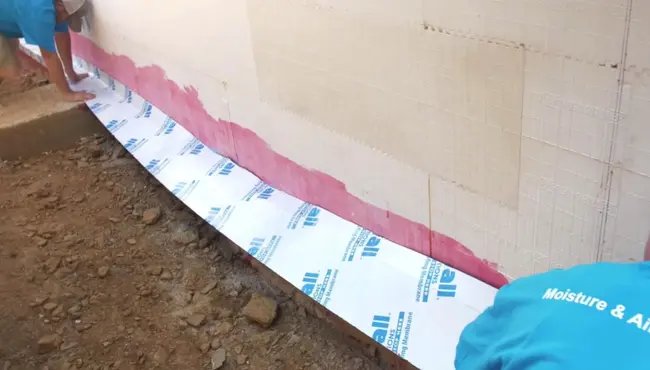
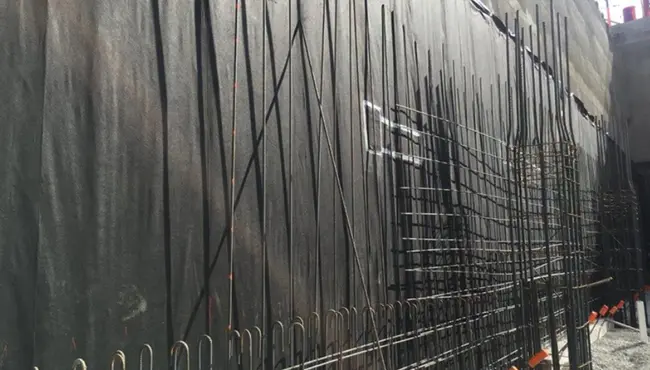
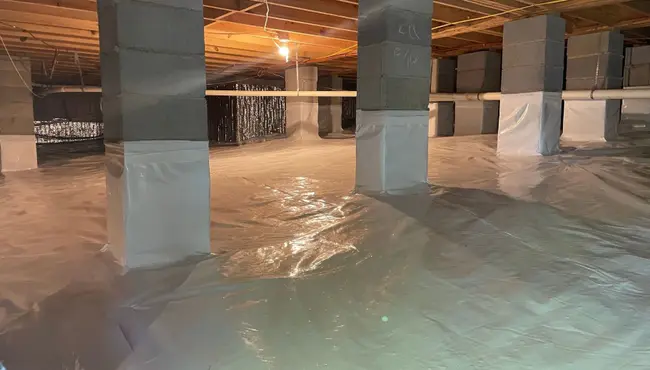
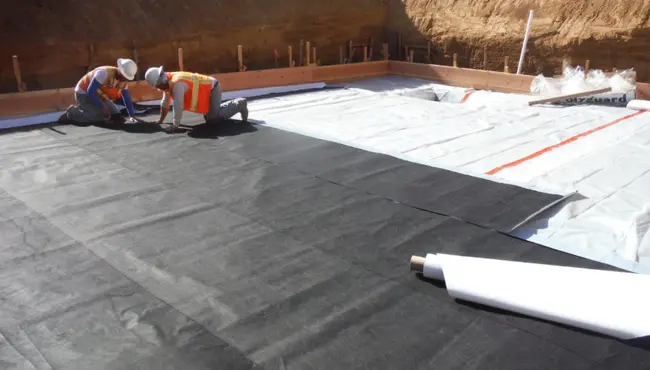
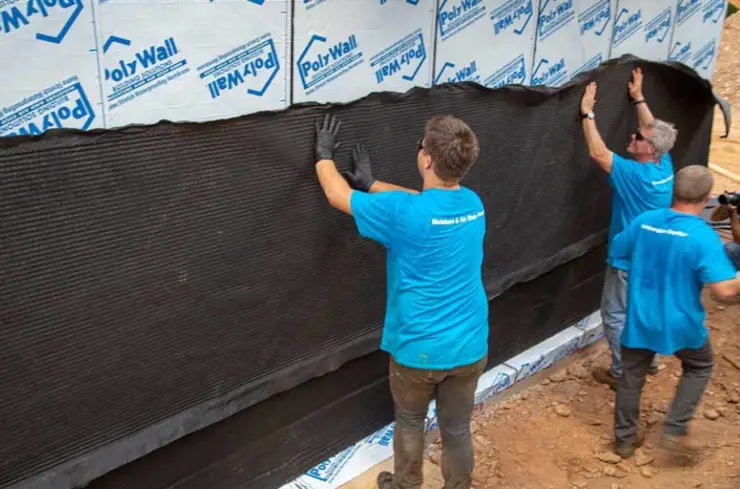
Interior coatings are most effective when paired with sub-surface protection. Below-slab vapor barriers and sheet-applied wall membranes offer moisture control at the material level. Selecting the right product means reviewing environmental exposure, expected traffic, and substrate compatibility.
Seal the Garage Entry Points That Often Fail
The garage door threshold is a common point of failure. Water flows directly through gaps below the door, especially when the driveway slopes inward. Threshold seals, trench drains, or rigid door dams can reduce this risk. Weatherstripping must also be checked and replaced if worn or compressed.
Crack control is another key issue. As slabs settle or expand with heat, they often open new moisture paths. Sealants must remain flexible over time and resist chemical breakdown. Transition zones between wall and slab must be sealed with materials that can flex under minor shifts. Without joint flexibility and proper sealing, no product can fully waterproof a garage against seasonal expansion and slab movement.
Moisture Control Extends Beyond Liquid Water
Even when standing water is eliminated, humidity can still cause damage. Closed garages trap moisture from cars, tools, and air circulation. Over time, this leads to corrosion of fixtures and mold on stored materials. In climates with large temperature swings, condensation becomes another problem.
- Warm interior air meeting cold exterior walls causes moisture to collect on surfaces.
- Vapor-permeable barriers and properly vented insulation help reduce this risk without compromising thermal performance.
Dehumidifiers, ventilation, and breathable wall assemblies help maintain a safe indoor climate.
Build In Multi-Layer Protection for High-Risk Areas
Some garages need extra protection based on location, soil conditions, or usage. High-risk areas often need redundant protection to effectively waterproof garage slabs and wall systems. This may include drainage mats behind wall panels or sub-slab drainage pipes connected to a sump system.
Redundancy Strengthens Garage Waterproofing Systems
Layered systems reduce the risk of total failure. If one product becomes compromised, the next layer continues to block intrusion. These builds require more planning but provide better long-term performance in demanding conditions. This is especially important for property owners looking to waterproof a garage in coastal, clay-heavy, or flood-prone regions.
Use Verified Materials with Proven Field Ratings
Moisture ratings, chemical compatibility, and temperature tolerances all matter when choosing waterproofing systems. Materials rated for positive-side hydrostatic pressure and real-world adhesion offer better resilience. Crack-bridging capability, vapor transmission rate, and bond strength are all key performance metrics.
ASTM Testing and Complete System Integrity
Branded systems tested to ASTM waterproofing standards offer reliability over off-the-shelf coatings. Sheet-applied membranes, elastomeric joint fillers, and fluid-applied barriers all come with documentation and specs. Choose complete systems wherever possible to avoid incompatibility between primer, membrane, and finish layers.
Polyguard Waterproofing Systems Protect Slabs and Walls
Garage protection doesn’t stop at surface-level coatings. Polyguard offers advanced waterproofing solutions tailored for garage environments:
- 650 PRM is a 65‑mil self‑adhering sheet membrane used post‑concrete pour. It adheres permanently, forming a continuous barrier against moisture entry on slabs and walls. It’s rated for horizontal and vertical applications and eliminates the need for separate protection courses.
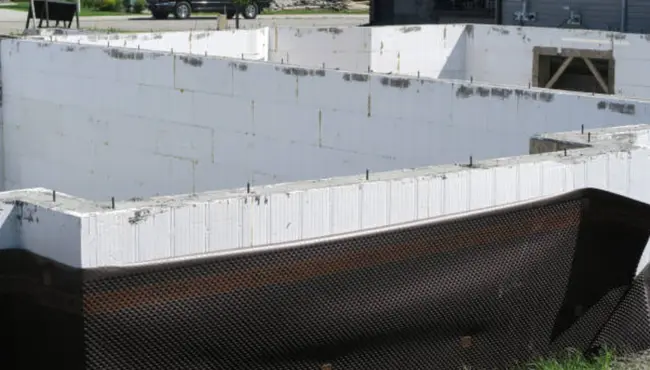
- 650 Sheet Membrane is a 60‑mil, pliable self‑adhesive waterproofing and vapor retarder. It virtually eliminates water and vapor transmission through concrete walls and slabs, and is suited for foundation walls, mud slabs, and ICF systems.
These Polyguard materials are engineered to waterproof garage environments exposed to moisture pressure, seasonal change, and irregular substrates. Both integrate with foundation waterproofing, trench drains, and sub-slab membranes to form a unified protection system.
Protect Your Garage With Polyguard Waterproofing Systems
Don’t let water damage compromise your structure. At Polyguard, we provide garage waterproofing materials designed to stop moisture intrusion, protect concrete, and extend system lifespan. Our membranes create a seamless barrier across floors and walls, and resist ground moisture and hydrostatic pressure. Contact us today for more information.