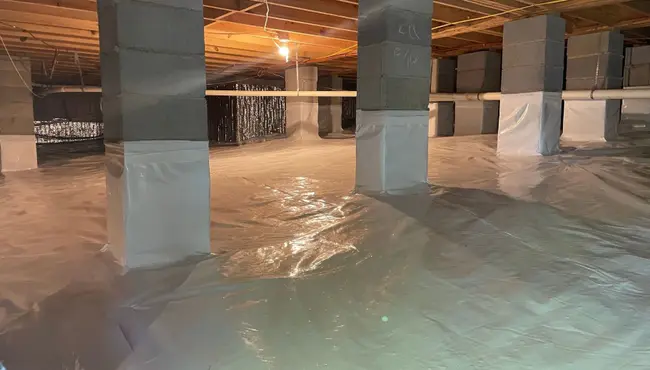
Concrete slabs often allow hidden moisture to rise from the ground into the structure. Moisture control beneath slab foundations depends on proper placement, durable materials, and jobsite-specific installation methods. A properly installed vapor barrier under concrete slab foundations is essential for preventing long-term damage to floors and finishes.
Why Moisture Moves Through Slab Foundations
Concrete is a porous material, even when fully cured. When poured directly onto soil or fill without moisture protection, it draws vapor upward from the ground. This vapor reaches the surface and affects flooring, adhesives, and interior air conditions.
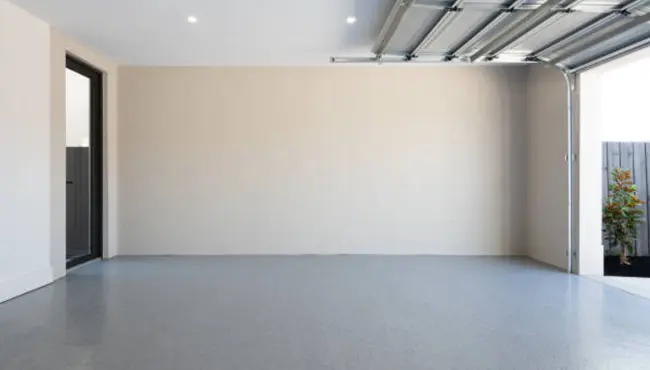
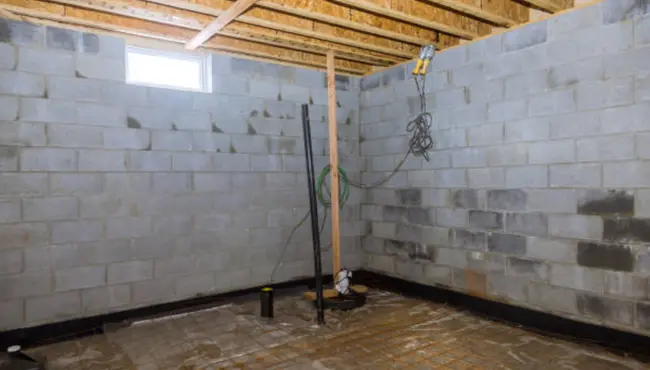
Monolithic foundation pours, garages, and basements are especially vulnerable. Uncontrolled water vapor can result in mold, flooring system failure, or visible surface efflorescence. Over time, repeated exposure accelerates damage to both finishes and the concrete itself.
When Project Conditions Demand a Vapor Barrier
Sub-slab moisture control becomes non-negotiable when site conditions or interior specifications increase vapor risk.
Moisture-Sensitive Flooring and Indoor Conditioning Require Sub-Slab Protection
Several construction and occupancy factors require the use of a vapor barrier under concrete slab installations. If the interior space will be conditioned by HVAC systems, the barrier helps isolate indoor humidity levels from sub-slab vapor drive. Projects that use moisture-sensitive floor coverings—such as wood, laminate, tile, or vinyl—also depend on a barrier to prevent warping, adhesive breakdown, or material detachment.
Slabs located below grade, especially in basements or in high water table areas, are at increased risk of upward vapor intrusion. Construction in regions with clay-heavy or poorly draining soils also creates conditions that demand vapor mitigation. When any of these factors are present, a sub-slab barrier helps maintain indoor environmental quality and protect interior materials.
Where to Place the Vapor Barrier in the Assembly
The vapor barrier must sit directly beneath the concrete, not embedded in the fill. Ideal placement is above the compacted base and below any insulation or reinforcement.
Incorrect placement exposes the barrier to damage and reduces its effectiveness. When placed too deep, it may shift or tear before the pour even begins. Field crews should verify sequencing before final slab prep.
Sequencing the Barrier Around Insulation
In slabs that include rigid foam or board insulation, barrier placement must follow climate-specific principles. In heating-dominated climates, the vapor barrier under concrete slab should be placed above the insulation—between the foam and the slab. This keeps the barrier on the warm side of the assembly, preventing condensation from forming within or beneath the insulation.
Avoid Trapped Moisture from Incorrect Layering
In cooling-dominated regions or mixed climates, designers often maintain the barrier directly under the slab and allow insulation to remain below it, provided the insulation is vapor-open or properly vented. What must always be avoided is sandwiching impermeable materials above and below insulation, as this traps moisture and leads to hidden degradation.
Avoid Double Barrier Conditions
Installing two impermeable layers below a slab creates the risk of moisture entrapment. This may happen when both the insulation and the barrier are vapor-closed and improperly layered. Any water that enters this sealed zone—whether from construction moisture or capillary action—has nowhere to go. Over time, the trapped water can break down adhesives, reduce R-value, and encourage microbial activity.
To avoid this, assemblies should use only one vapor barrier layer. If insulation is included, select vapor-permeable products or use manufacturer-approved venting strategies. Proper sequencing and product compatibility help avoid this common and costly failure.
When to Install a Vapor Barrier Under Concrete
Timing is everything. The vapor barrier must be installed before any steel reinforcement or pour staging begins.
A clean and continuous barrier surface must be ready at the time of concrete placement. Any late-stage fixes or re-positioning increase the risk of seam gaps or punctures.
What Materials Are Best for Below-Slab Vapor Protection
To perform reliably, barriers must meet ASTM E1745 performance standards. These include minimums for puncture resistance, tensile strength, and water vapor permeance.
Choose Durable Membranes with Proven Testing
On most jobsites, thinner films are not sufficient. Construction loads, rebar movement, and foot traffic require stronger materials. Membranes rated Class A offer high durability and low permeance.
Reinforced Barriers for High-Risk Conditions
In basements, coastal projects, or commercial builds with sensitive finishes, reinforced barriers perform better under stress. Multi-layer products with embedded scrims resist rips and deformation.
Tools and Detailing Methods for Reliable Installation
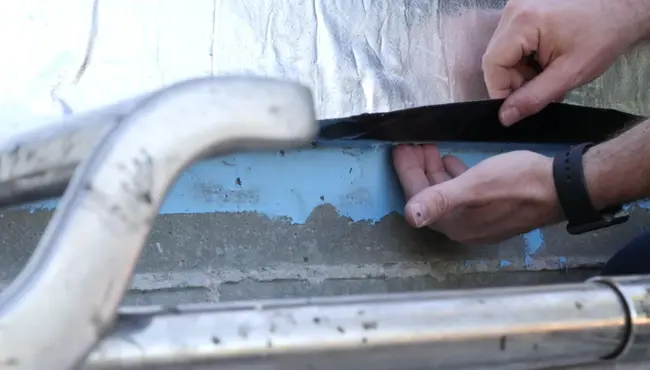
Successful installation of a vapor barrier under concrete slab assemblies depends on having the right tools and following detailing best practices. Crews should use barrier-specific seam tape that matches the membrane’s chemical composition. General-purpose duct or packing tape lacks adhesion strength and is not rated for soil-side contact or hydrostatic pressure.
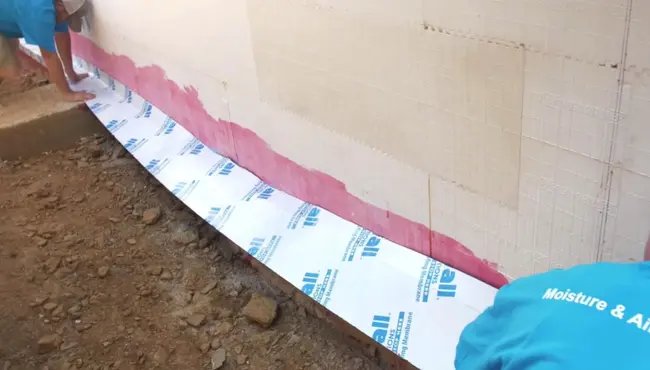
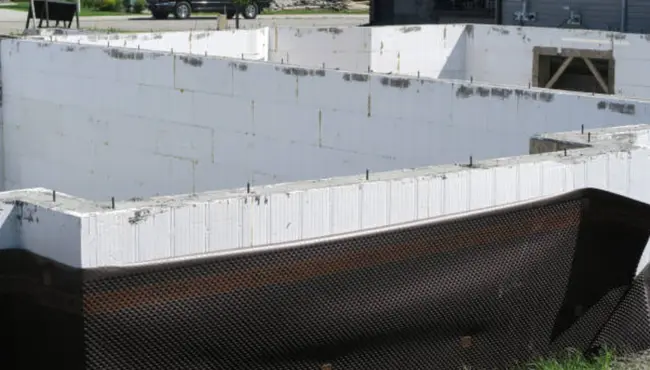
At perimeter edges, the barrier must terminate vertically along the interior face of the foundation wall. This step blocks lateral vapor movement and locks moisture out of the slab perimeter. Manufacturers often provide pre-formed corners and boots to maintain continuity around penetrations. During installation, weights or sandbags can be used to keep the barrier flat while reinforcement is staged.
Step-by-Step Overview for Installing Below-Slab Vapor Barriers
Installation begins with a compacted, level ground to protect the barrier from punctures.
- All sharp rocks, debris, and standing water must be removed to prevent distortion of the barrier.
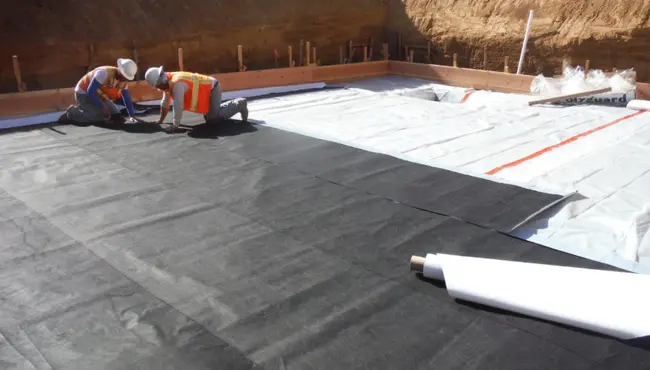
- Next, the vapor barrier is rolled out across the prepared surface. It should be laid flat, with seams overlapped by at least six inches in all directions.
- Seams must be sealed with compatible tape, using a hand roller to ensure full contact.
- Once seams are taped and any penetrations are booted, the slab edge terminations are turned up the interior wall face.
- Tape is applied to fasten the barrier vertically.
- After inspection, reinforcement is placed with care to avoid damaging the surface, and concrete is poured directly on top of the protected assembly.
Proper timing of concrete finishing plays a major role when a vapor barrier is used. Because the barrier blocks moisture absorption into the ground, bleed water rises to the surface and may take longer to evaporate. Crews should monitor surface moisture before troweling to avoid trapping water beneath the finish, which can weaken surface integrity or lead to delamination.
When a Vapor Barrier Is Required Under Concrete Slabs
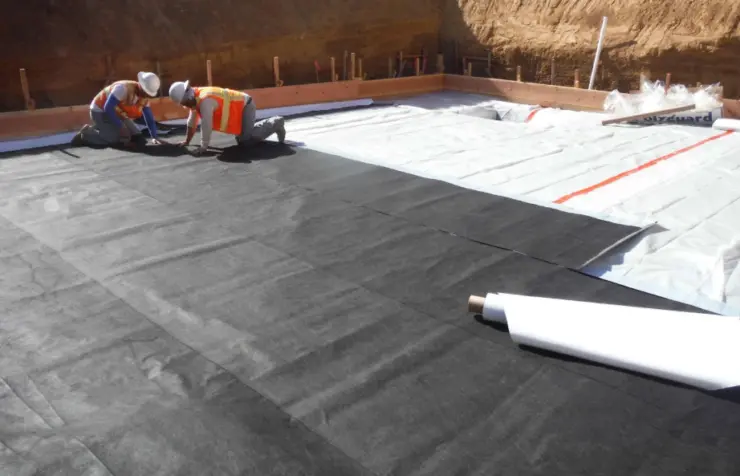
If the slab will support finished flooring or conditioned interior space, a vapor barrier is required. Adhesives and finished flooring cannot block vapor migrating from the ground—only a properly installed barrier can stop sub-slab moisture.
Unconditioned spaces like detached utility pads may not require one. But garages, basements, and even mechanical rooms benefit from this protection.
How Moisture Intrusion Affects Long-Term Building Health
Moisture vapor carries water in its gaseous form. It also transports dissolved salts, radon, and chemical byproducts from the soil. This movement contributes to air quality issues and structural wear.
Remediation after the fact is costly. Once adhesives fail or wood warps, restoration often requires removing flooring and grinding back the concrete surface.
Why Specifying a Moisture Barrier in Slab Assemblies Pays Off
Including a moisture barrier in slab assemblies pays off long after construction is complete. It prevents the kind of gradual, invisible damage that leads to warranty claims and insurance losses. Floors remain flat, adhesive bonds last longer, and internal humidity stays in check—reducing the burden on HVAC systems.
For facility managers, the barrier reduces the chance of mold development or flooring system detachment. For designers, it protects long-term material performance. And for builders, it minimizes callbacks and improves customer satisfaction by ensuring a stable foundation.
Polyguard Below-Slab Barriers Built for Field Durability
Polyguard offers multiple barrier systems designed for high-risk slab applications. Each product is tested to ASTM E1745 and engineered to resist mechanical damage, chemical attack, and long-term vapor intrusion. These systems reduce failure risks from trapped vapor and streamline below-slab prep for slab-on-grade construction.
- Polyguard Underseal® Underslab Membrane is a robust, self-adhesive barrier with high puncture resistance and reliable adhesion to concrete. It performs reliably in commercial slabs, utility rooms, and basement settings where a sealed envelope is required.
- Polyguard Underslab TRM is a 95‑mil pre-pour membrane that combines moisture vapor protection with a built-in physical termite barrier. Its self-adhesive seams and robust durability make it ideal for job sites requiring both vapor and pest control.
When used correctly, each of these solutions helps ensure the effectiveness of a vapor barrier under concrete slab assemblies—protecting flooring, insulation, and indoor air from long-term moisture intrusion.
Control Vapor Intrusion with Polyguard Solutions for Below-Slab Protection
Our barrier products withstand jobsite conditions and are validated through lab and field testing for dependable moisture protection. From slab prep to post-pour curing, we help you avoid floor rework delays and protect material performance. Contact us today for more information.